 Listen hard. You too may be able to hear the melancholy, long, withdrawing roar that Sophocles heard long ago on the Aegean.
A few years ago I did an MBA. One of my goals was to try and find a sustainable business model for something I had given my life to – television news. You’ll not be surprised to learn that it proved a rather fruitless search for a means of preservation.
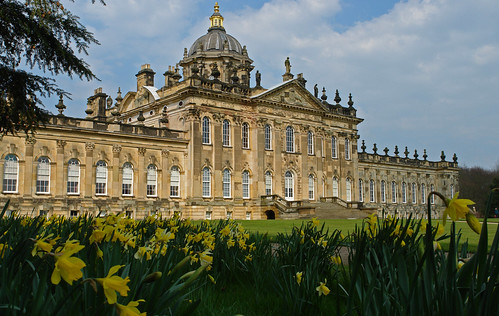
To preserve things, of course, is to change them. English country houses, once the corporate HQs of ancien agri-businesses, are now tourist traps. They are stripped of the people that made them powerful human institutions – they exist now entirely as artefacts, their waxed oak boards and grand staircases walked for the passing wonder of a wet afternoon.
Preservation preserved neither the aristocracy, nor their tenants and tradesmen, nor the servants who served them. Cherished family traditions perished. Pews in parish churches went unfilled.
But the buildings still stand. And unconsecrated chapels still get visitors.
So when we talk about new business models for journalism, let’s not fool ourselves. What is that we want to preserve? And what will be left at the end of the process?
3 responses to “Preserving journalism”
Perhaps we should instead say, “new businesses for news.” There are new enterprises devoted to new out there (I had almost a dozen present at my confab on new business models for news) and they spring from new worldviews.
The way I’m coming to think of it is – how do we capture or replace the popular public information, watchdog and whistleblowing functions that were (according to the newspaper theory of democracy) the province of declining news media?
The most instructive example for me of the very real problems these successors will encounter going forward is Wikileaks and its problems coming up with a role/relationship with public and press.
Ultimately I think govts are going to have to make media winners knuckle down to become news providers, and they’ll provide news/information services as grudgingly as TV networks currently do.
When I started the Journalism Leaders Course at UCLAN last year, I had a very similar goal (although not for television news).
But the more I searched for a way to preserve journalism, the more I realised I’d never really questioned what it was.
Furthermore, I’d never properly questioned why it might be wanted or needed.
It was very unpleasant to start deconstructing a profession I am so passionate about, but it was also useful to be faced with some home truths.
I certainly don’t have any clear vision of my future yet, but I know that what I might be able to make money out of and what I want to preserve are very different.
The scary thing is that in many cases they are actually mutually exclusive.
My passion is, I think, romantic and idealistic: I admire the investigative/research side of journalism – the chance to serve readers by highlighting important issues.
I also love the idea of presenting that research in engaging and innovative ways.
But, if I’m honest, I’ve not had a chance to do much of that.
Most people do not need journalists producing in-depth reports in order to live their lives.
They need entertainment and they need information, but that already exists without our current concept of journalism. It just needs someone to organise what’s out there and put into a convenient and accessible format.
News businesses also do not need journalists in order to make money.
People who have to make phonecalls and do interviews are, in essence, an unnecessary overhead.
There are businesses that have already done these calculations and decided it makes better business sense to just re-write from press releases published online.
So in an increasingly efficiency-driven world, I suppose my idealised version of journalism becomes a very different product to the one that can be produced by a lean, information-compiling business.
It also has a very different value propositon and a different market. Perhaps it’s not unlike agriculture – you have one or two very big players serving the mass market and then you have the breakaway smallholders who produce specialist food for more defined sectors.